
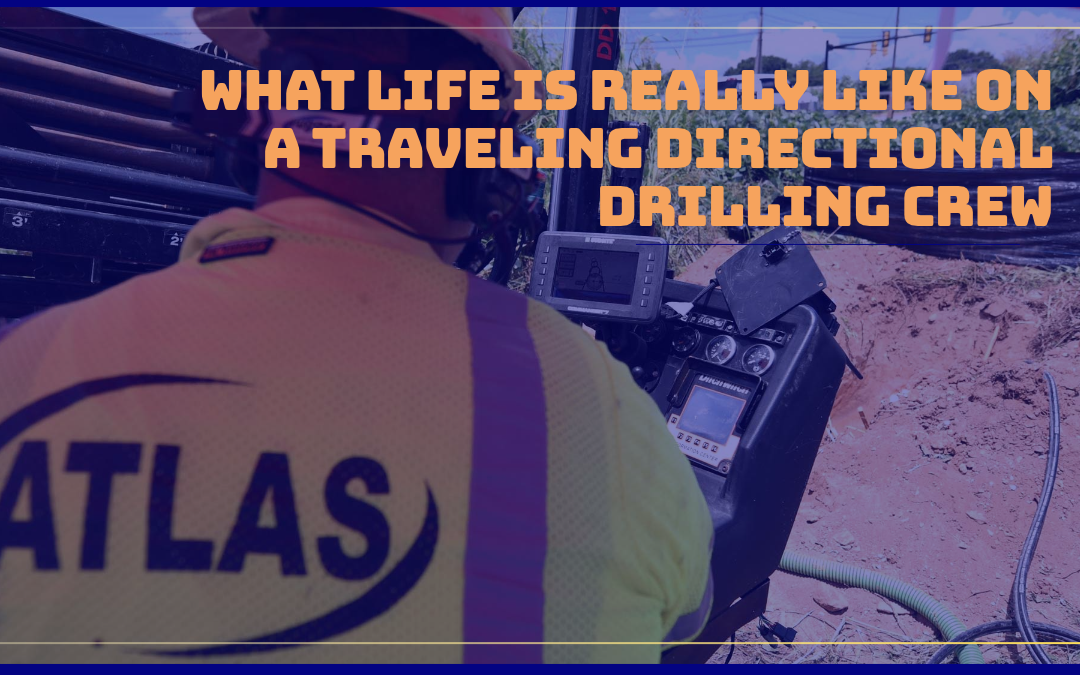
Travel is part of many underground construction careers. For employees considering traveling directional drilling jobs, it is important to understand what that actually means before taking the position.
The work can pay well and provide opportunities to take on specialized projects. It can also mean hotels, changing schedules, weather delays, and nights away from home.
Atlas Group does not pretend that traveling work is always easy. Instead, the company tries to make the lifestyle manageable while giving crews enough flexibility to handle life outside the job.
Why Directional Drilling Requires Travel
Directional drilling is specialized work.
A single town does not have an endless supply of major road, river, utility, and infrastructure crossings. Crews have to go where the projects are.
Atlas Group focuses heavily on West Virginia and surrounding states. Depending on the project, a crew may work in Ohio, Pennsylvania, Kentucky, Virginia, or elsewhere in the region.
Some projects may be relatively close to home. Others can require several hours of travel.
Anyone considering the industry should expect travel to be part of the career rather than an occasional surprise.
Atlas Group Tries to Keep Crews Close to Home
Traveling does not mean every employee needs to spend more time away than necessary.
Atlas Group tries to match crews and projects in ways that make sense when possible.
If a project is closer to an employee's home, the company may adjust responsibilities or crew assignments to reduce unnecessary travel.
That flexibility is another reason Atlas Group values well-rounded employees.
Someone may normally operate a drill but have an opportunity to work closer to home in another role. If that person can weld, operate equipment, locate, or handle another task, the company has more options.
The goal is not to promise that everyone will always work near home. Specialty underground construction does not work that way.
The goal is to avoid unnecessary time away when the project and crew allow it.
Weekends and Home Time Matter
Atlas Group tries to avoid weekend work when possible.
There are exceptions.
A project may reach a point where the crew needs to continue. Weather may affect the schedule. An unexpected problem may need attention.
That is part of construction.
However, the general goal is to protect time at home.
Employees have birthdays, anniversaries, vacations, appointments, and family responsibilities. Atlas Group wants people to handle those things when they need to.
A well-rounded crew makes that easier because teammates can cover more responsibilities when someone is away.
Where You Stay Matters Too
The workday does not end when an employee leaves the jobsite if the hotel is another long drive away.
Atlas Group tries to keep crews close to the project.
Leadership has a simple standard for lodging: they do not want employees staying somewhere they would not be willing to stay themselves.
Sometimes a project is in an area without many lodging options. In those cases, the company still tries to balance reasonable accommodations with proximity to the work.
For longer projects, crews may use short-term rentals such as Airbnbs.
That can make traveling work feel more normal. Employees may have a kitchen, shared living space, and more of a home environment than a standard hotel room provides.
Different Crews May Prefer Different Schedules
Not every traveling crew wants to structure the week the same way.
Some employees prefer a traditional workday and more downtime each evening.
Other crews may want to work longer days while they are away so they can finish the week and get home sooner.
Atlas Group allows some flexibility when the project supports it.
The important point is that employees communicate and the work gets completed safely.
Traveling construction already asks employees to spend time away from home. How the crew structures that time can make a significant difference in the experience.
Weather Can Change Your Paycheck and Schedule
One of the most important realities of traveling directional drilling jobs is that construction remains weather dependent.
Heavy snow can stop tractor-trailers from reaching a jobsite. Extreme cold can affect water and drilling fluid. Rain can make a right-of-way inaccessible.
Sometimes crews can continue working in the rain once the equipment is set up.
Other times, the owner, road authority, site conditions, or access restrictions make work impossible.
Those decisions are not always under the contractor's control.
A new employee should understand that a high-paying trade does not guarantee the exact same number of hours every week of the year.
Seasonal Slowdowns Are Part of the Trade
Experienced construction workers usually understand that weather and holidays can create slower periods.
For someone entering the industry for the first time, that can be surprising.
Atlas Group may have a week or a short stretch where field work slows because of weather, project timing, or the holiday season.
The company tries to keep some shop and maintenance work available during slower periods. Directional drills and auger boring equipment require significant maintenance.
However, field employees should still understand that construction schedules move differently than office or retail schedules.
Some weeks are extremely busy. Others are not.
Plan Your Finances for the Entire Year
Specialized field work can provide strong earning opportunities.
That can create another challenge for younger workers.
When someone begins earning more than they have before, it is easy to build a lifestyle around the busiest possible workweek.
Then bad weather arrives or a project pauses.
Atlas Group encourages employees to understand that those changes are normal.
Do not build your personal finances around the assumption that you will work the maximum number of hours every week.
A sustainable construction career needs to work during both busy and slower periods.
That becomes even more important as employees get older and add family responsibilities.
Traveling Crews Spend a Lot of Time Together
Travel also changes crew relationships.
Coworkers may spend the workday together, ride to the hotel together, and then stay at the same property.
That is one reason Atlas Group puts so much emphasis on personality fit and teamwork.
Technical skill matters, but the crew also needs people who respect shared spaces, communicate well, and can handle stressful projects without creating unnecessary conflict.
The best crews develop strong trust.
They know who can cover a position. They understand each other's habits. They also know when someone needs to get home and take care of something outside work.
Is Traveling Directional Drilling Right for You?
Traveling construction is not the right fit for everyone.
Before pursuing the career, ask yourself whether you are comfortable with:
- Traveling during the workweek
- Working outdoors in changing weather
- Staying in hotels or short-term rentals
- Adjusting schedules around project needs
- Having occasional weather-related downtime
- Working closely with the same crew for long periods
- Learning several field skills
- Being away from home during some projects
For the right person, the same things that make the career challenging can also make it rewarding.
Projects change. Locations change. Crews solve difficult problems together. At the end of a successful bore, the team can point to something that was accomplished because everyone did their part.
Atlas Group is always willing to talk with people interested in field careers, including directional drill operator, operator, gas distribution tech, and foreman roles.
If you are considering traveling directional drilling jobs, go into the career with realistic expectations. Travel, weather, and changing schedules are part of the work, but a company that respects home time and supports its crews can make that lifestyle much easier to manage.
Interested in a career with Atlas Group? View Open Positions or Contact Atlas Group to learn more about opportunities in directional drilling, gas distribution, equipment operation, and field leadership.