
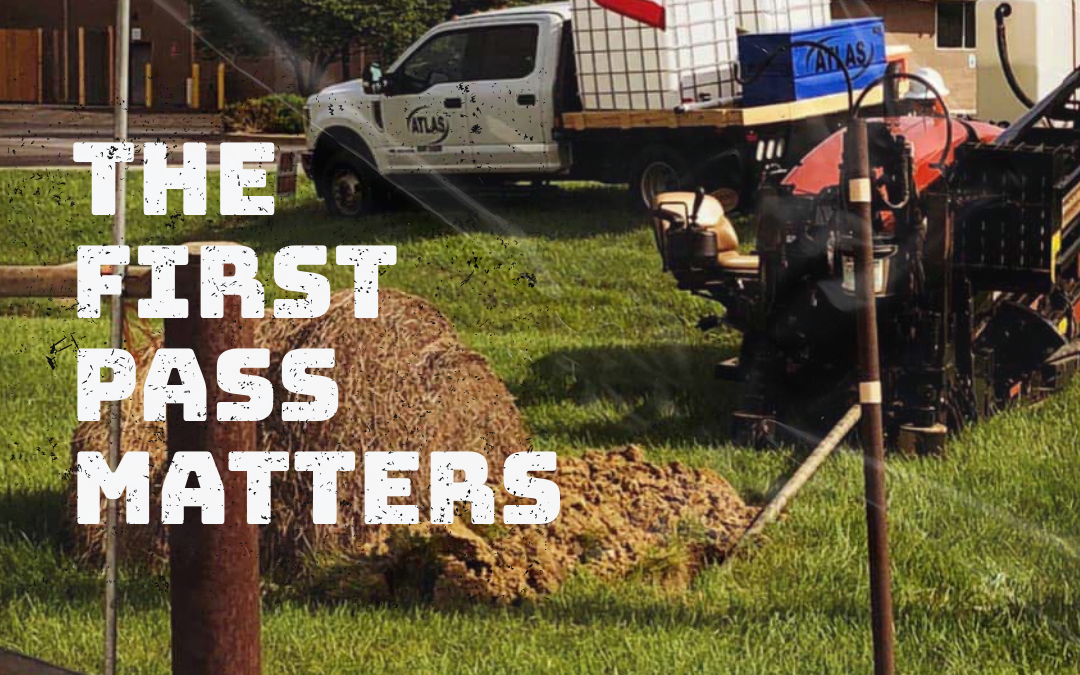
The HDD pilot bore is the foundation of the entire directional drilling process.
Before the final pipe is pulled into place, the crew first creates a smaller path through the ground. That path establishes the route, grade, steering, and working space for everything that follows.
At Atlas Group, the pilot bore is not treated as something to rush through.
Kyler Woody explained it simply: if the pilot bore cannot be completed, the bore cannot be completed.
That is why the crew spends time getting the pilot right before moving on to reaming or pullback.
What Is an HDD Pilot Bore?
The pilot bore is the first complete hole drilled from the starting point to the target.
During this stage, the drill head follows the planned underground route. The crew steers it based on depth, location, ground conditions, and the final product that will eventually be installed.
Once completed, the pilot becomes the path that later reaming passes will follow.
Woody described it as a man-made conduit through the ground.
If the final pipe is small enough, the pilot may already provide sufficient room. Larger installations require the pilot hole to be enlarged before pullback.
Either way, the quality of that first path affects every later stage.
Steering Happens During the Pilot Bore
The pilot stage is where the crew establishes the actual route.
After that, the later stages are largely following what has already been created.
Atlas Group explained that once the pilot bore is complete, the team is no longer steering during reaming. The reamers are following the underground path made during the pilot.
That makes early steering decisions critical.
The crew may need to move:
- Down to the required depth
- Left or right around an obstruction
- Beneath a road or river
- Back toward the surface
- Through changing soil or rock formations
Those adjustments must happen gradually.
A directional drill can make impressive turns, but it cannot instantly change direction.
The drill rods and final product both have physical limits.
Oversteering Can Create Problems Later
Reaching the target is only part of a successful pilot bore.
The path also needs to be smooth enough for the final pipe.
Many products have a maximum allowable bend radius. That means they can only bend so far before becoming stressed or damaged.
Atlas Group sees this most clearly with steel pipe.
Woody explained that steel can wrinkle when forced through an overly aggressive bend, similar to a bendable straw.
That problem may not be obvious from the surface.
Once the pipe is underground, project owners may only see where it entered and where it came out.
That is why Atlas Group pays attention to how much steering is used during the pilot.
A bore can hit the target and still create a poor path if the route requires too much correction.
Ground Conditions Can Make Steering Difficult
The pilot bore also gives the crew its first real experience with the subsurface conditions along the route.
Layered rock can create steering challenges.
For example, a drill head may become trapped along a natural seam between two rock layers. If the crew needs to begin climbing upward, the head may struggle to bite into the harder material above it.
Woody explained that weathered rock and layered formations can make that transition difficult.
Similar problems can occur in soil formations.
That is one reason unknown ground conditions create so much difficulty in directional drilling.
The crew can plan around known rock, clay, sand, or cobble. Unknown conditions force the team to adjust after drilling has already begun.
Fluid Returns Help Tell the Story
A good HDD pilot bore is not judged only by its shape.
Atlas Group also watches drilling fluid returns.
During drilling, fluid is pumped through the system. That fluid helps carry cuttings out of the bore and supports the walls of the hole.
The goal is to see that fluid return.
Woody said one of the earliest warning signs of trouble is fluid loss. The crew may still be pumping at a high rate, but the fluid suddenly stops returning.
At that point, the team has to determine what is happening.
The fluid may be:
- Entering a void
- Moving into a cavern
- Escaping through a formation
- Entering a coal seam
- Traveling somewhere unexpected underground
Those conditions can affect both the pilot and the later stages of the bore.
One Bore Lost Tens of Thousands of Gallons
Atlas Group encountered an extreme example during a river bore.
Only a few rods into the pilot, the crew lost fluid completely.
This was not a small reduction in returns.
The team continued pumping, but the fluid was disappearing into the ground.
Woody estimated that approximately 60,000 to 70,000 gallons of fluid went into underground voids during the project without ever returning to the surface.
The area was known to contain cavernous formations.
The crew had to work through that condition while continuing to understand what the bore was doing underground.
That kind of situation demonstrates why the pilot is such an important diagnostic stage.
It tells the team much more than whether the drill head reached the other side.
A Good Pilot Bore Has Good Flow
When Atlas Group evaluates a successful pilot, fluid movement is one of the major indicators.
Woody described good returns as part of what separates an average pilot from a strong one.
The team wants drilling fluid and cuttings moving back through the bore as intended.
Good flow helps show that the hole is being cleaned.
It also helps the crew build the bore wall needed for later reaming and pullback.
If cuttings remain inside the hole, friction and other problems can develop later.
That is why the pilot bore is not simply about steering.
It is also about creating a clean and stable path.
The Pilot Bore Sets Up the Reaming Process
Larger pipe requires the crew to enlarge the original pilot.
This is called reaming or hole opening.
The reamer follows the path created during the pilot bore.
That makes the pilot an investment in every later pass.
Atlas Group explained that drilling fluid from the pilot begins creating a supported zone around the original hole. Later reamers can then enlarge that path while continuing to rely on the original bore.
If the pilot is poorly designed, later reaming becomes harder.
Problems with the original path do not disappear simply because a larger tool is attached.
Instead, the crew may be enlarging the same problem.
The Crew Should Not Rush the Pilot
There is always pressure to make progress.
Clients want the project completed. Crews want production. Time and equipment both cost money.
Atlas Group still believes the early stages deserve patience.
Woody told his crews that the time to focus is at the beginning.
Build the pilot correctly. Get the setup right. Create the best borehole possible.
Speed should come later.
That approach reflects the financial reality of directional drilling as well.
On many projects, Atlas Group is investing significant labor, equipment, fluid, and time before the final pipe is installed.
A poor pilot puts all of that investment at greater risk.
The Final Pipe Reveals How Well the Bore Was Built
The condition of the pipe during pullback can also provide clues about the pilot.
Atlas Group watches how the pipe behaves as it enters the ground and how the operation feels at the drill.
The crew may inspect:
- Surface damage
- Scraping
- Coating condition
- Tracer wire condition
- Pull resistance
Woody explained that a well-built bore should feel smooth during the final stages. From the driller’s seat, pulling through a strong pilot should feel relatively easy.
Resistance may indicate that something in the path is working against the pipe.
That can increase stress on both the product and equipment.
The HDD Pilot Bore Is the Foundation of the Project
The HDD pilot bore determines far more than where the drill exits.
It establishes the path for reaming and pullback.
A strong pilot should:
- Reach the intended target
- Maintain acceptable bend radius
- Avoid unnecessary steering
- Maintain good drilling-fluid returns
- Remove cuttings effectively
- Create a stable path for later passes
- Reduce unnecessary resistance during pullback
Atlas Group performs horizontal directional drilling throughout West Virginia, Ohio, Pennsylvania, Kentucky, Virginia, and surrounding areas.
For the Atlas Group team, the pilot bore is an investment in everything that follows.
Taking additional time to build it correctly can make reaming easier, protect the final pipe, and give the project a stronger chance of reaching the other side successfully.